Precision jumps, instant restarts and the counterintuitive fix for most missed leaps — a guide to getting better at platformers.
Almost every missed jump is late
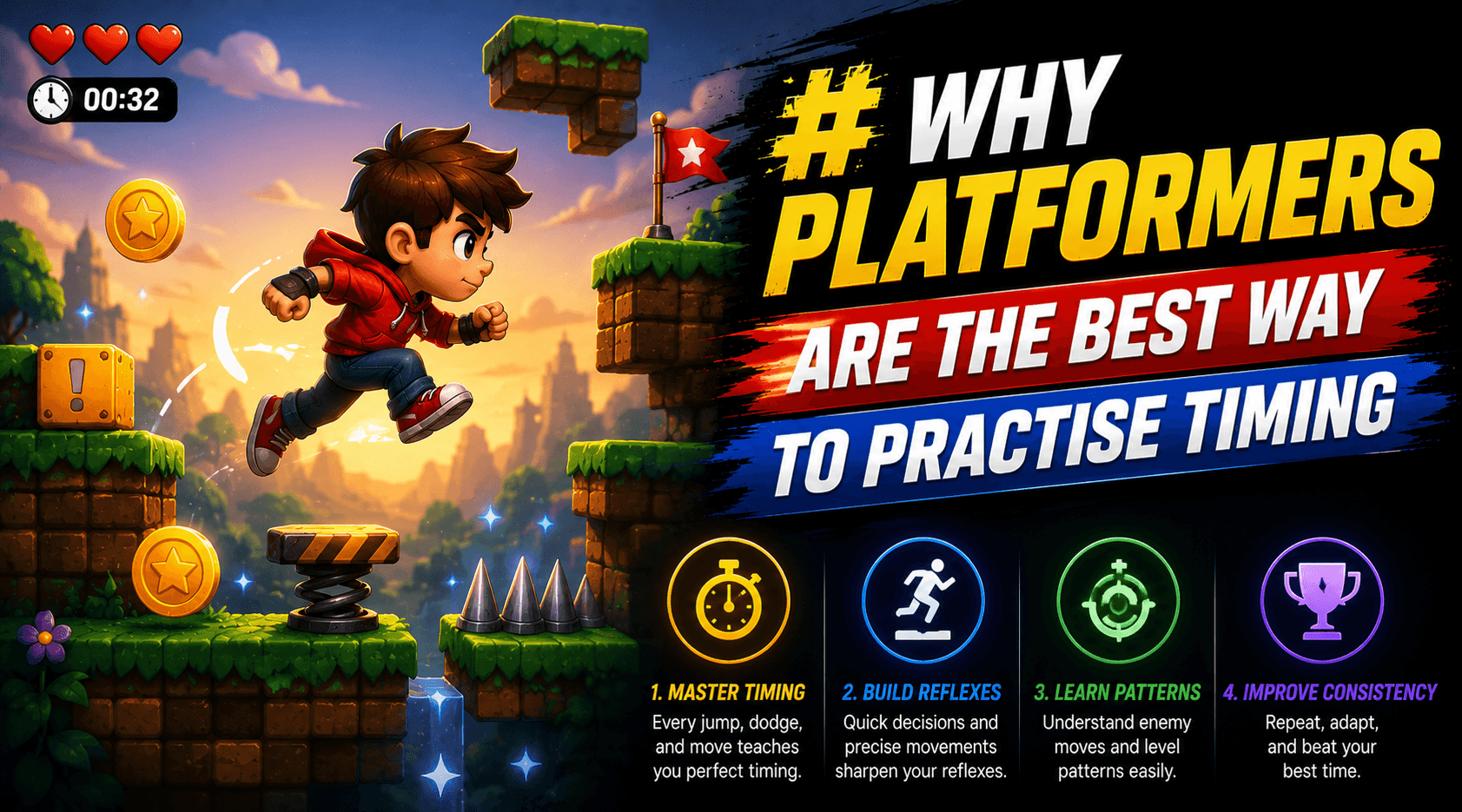
If you take one thing from this article, make it this: the overwhelming majority of failed platformer jumps are late rather than early. Players wait until they can clearly see the edge before pressing, by which point the character has already started falling. Deliberately jumping a fraction earlier than instinct suggests fixes more deaths than any other single change, and it takes about ten attempts to recalibrate. It feels wrong for those ten attempts and then it feels completely natural.
Play the rhythm, not the decisions
A section you have to think your way through will fail under pressure. The same section played as a sequence of beats — jump, land, jump, wait, jump — succeeds far more reliably, because rhythm survives stress in a way deliberation doesn't. That's why repetition works so well in this genre, and why players so often clear a hard section immediately after taking a break: the rhythm holds up better than the conscious plan does. Try humming the timing of a section, oddly enough. It genuinely helps.
Practise the part that's beating you
Everyone replays the opening they've already mastered, because it feels good and it's the path of least resistance. It also teaches you nothing. If your runs consistently end at the same place, that place is the only part of the level worth your attention — everything before it is warm-up you can already do. Games with generous checkpoints make this easy; in games without them, it's worth deliberately taking the safe route through the easy parts so you arrive at the hard section with your concentration intact.
Failure costs almost nothing here
The genius of a good platformer is how quickly it puts you back. Restarts are instant, so a death is information rather than a punishment — the timing of a moving platform, the reach of a jump, the exact spot where you keep slipping. Because there's no waiting to sap your momentum, you can fail dozens of times in the space of a few minutes and feel like you're making progress the whole way, which is exactly what makes the genre so absorbing.
Find your rhythm on PokiPix
The Platformer category is full of free games that load right in your browser and restart the instant you fail. Pick one, find a section that keeps beating you, and work on that alone for a few minutes. There's no better way to feel yourself improving run by run — and nothing to install before you start.