Practical techniques for the moment a puzzle stops making sense — including the one most players resist for far too long.
Scan the whole board before you move
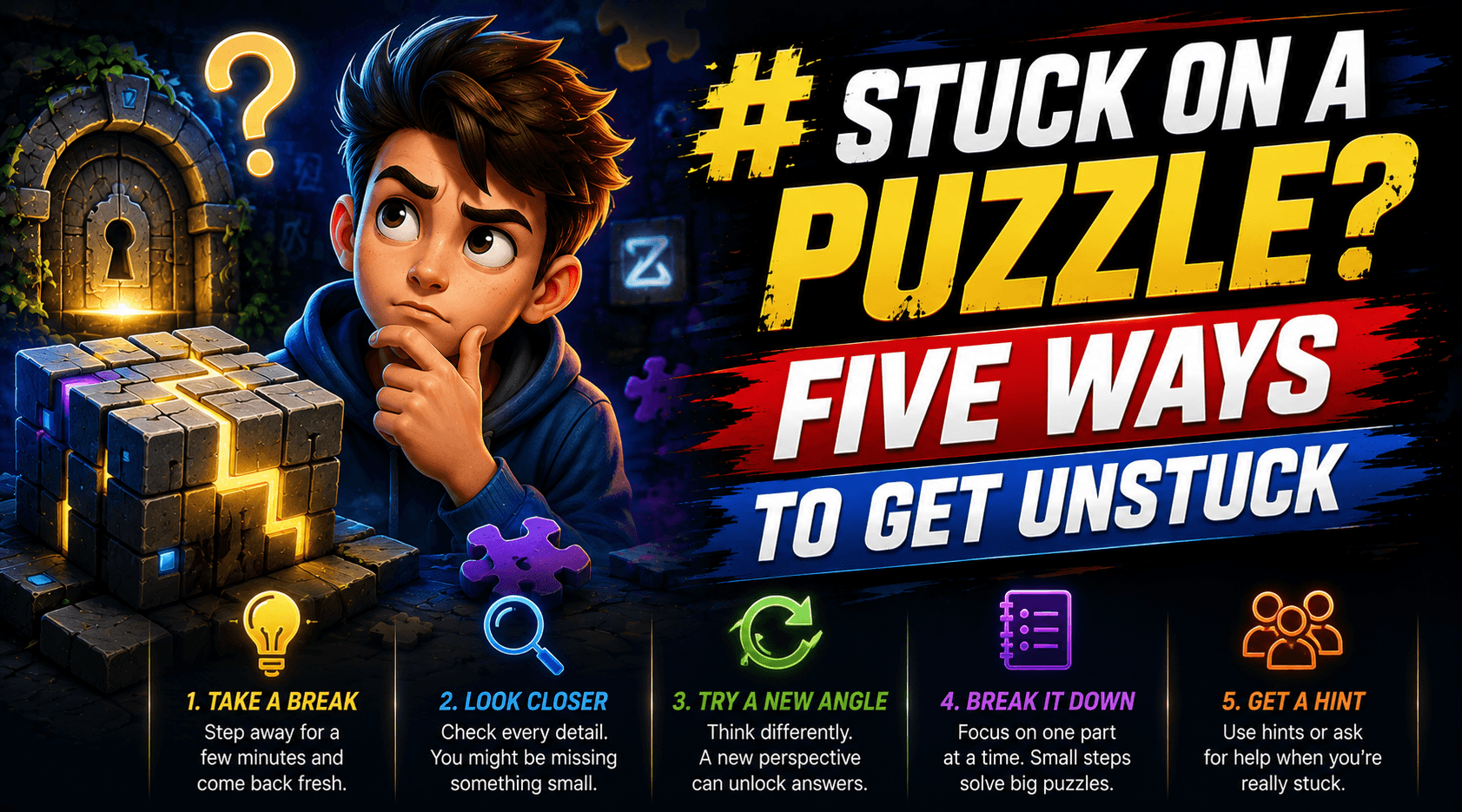
Most bad puzzle moves come from acting on the first opportunity you spotted rather than the best one available, and the difference between those two is usually visible within about five seconds of looking properly. Before touching anything, take in the entire board. It feels like wasted time and it isn't: a single move made in the wrong place can close off options you'll need three moves later, and in most puzzle games those consequences aren't obvious until it's already too late to undo them.
Work from the constrained area outward
Corners, edges and crowded regions have the fewest possible solutions, which makes them the most informative places to start. Open space gives you too many options to reason about, so resolving the tight areas first narrows everything else down naturally. This applies across the genre — matching games, sliding puzzles, logic grids and physics puzzles all reward starting where your choices are limited rather than where they're plentiful.
Look at the move you've been avoiding
When you're genuinely stuck, the solution is very often something you've already considered and dismissed. Puzzle designers rely on this, building around a move that looks wrong until you see what it enables. If you've been circling the same three ideas, deliberately examine the option your instinct keeps rejecting. It's uncomfortable and it works surprisingly often, because your instinct is pattern-matching against puzzles you've solved before rather than the one in front of you.
Restart early, and take breaks
In most puzzle games a board becomes unwinnable several moves before it becomes obviously unwinnable, and players who recognise that early rack up far more wins than the ones who fight on out of stubbornness. Restarting is a strategy, not a failure. And if a puzzle has genuinely beaten you, walk away for a few minutes — solutions have a well-documented habit of appearing the moment you stop staring at them and let your subconscious work on it instead.
Find your next puzzle on PokiPix
Our Puzzle category covers every style of thinker — matching, logic, numbers, words and physics — all free and loading instantly in your browser. If one type isn't clicking for you, try a different one rather than writing off the whole genre; these styles reward such different thinking that disliking one says almost nothing about the others.