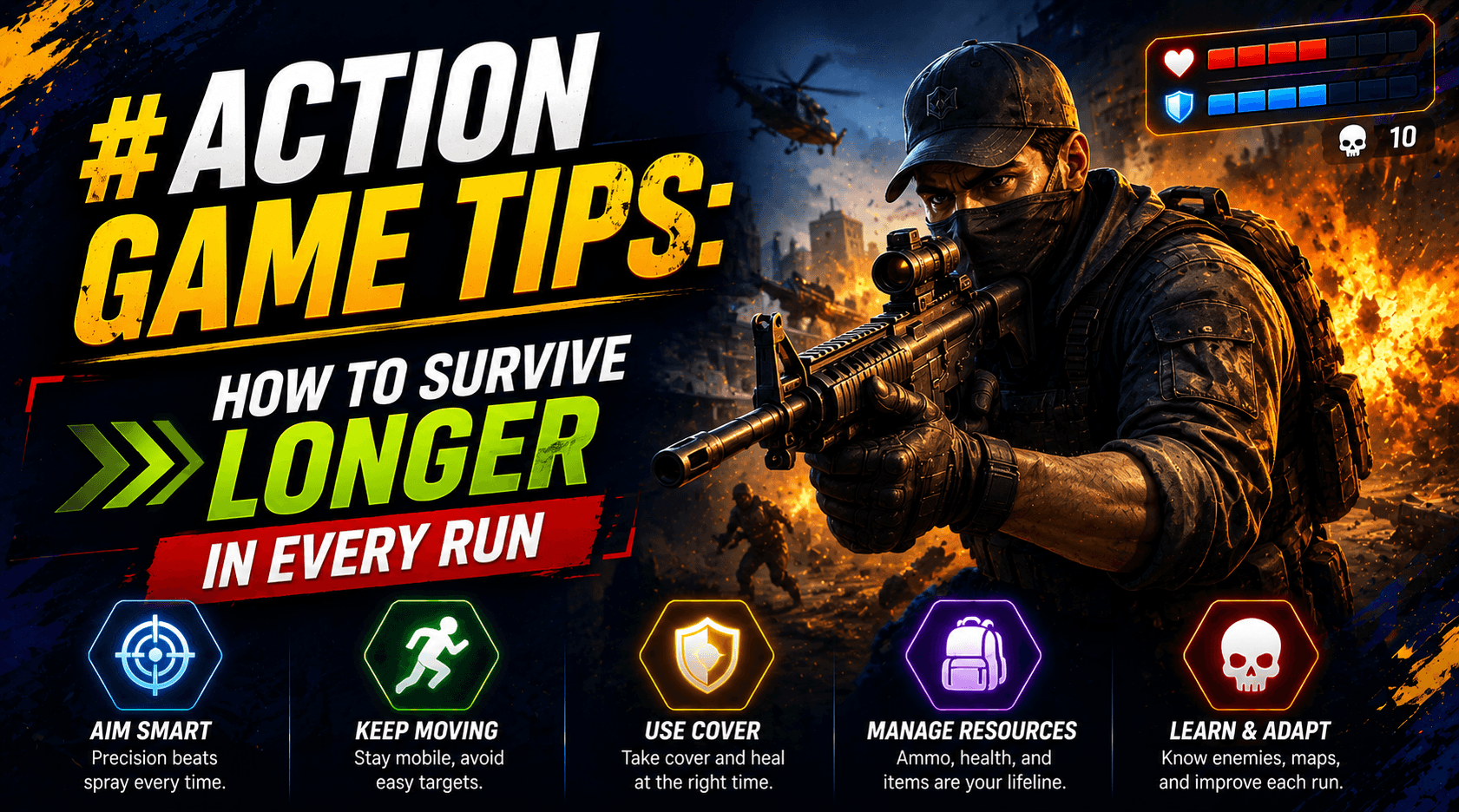
Small habits that add up to much longer runs — spacing, enemy tells and the one mistake that ends more action games than difficulty ever does.
Movement is your best defence
The single biggest difference between a short action run and a long one is whether you kept moving. Standing still feels safe when you're lining up an attack, but it removes every option you have the moment something arrives from an angle you weren't watching. Good action players treat movement as the default state and stopping as a deliberate, temporary choice. Keep circling, keep repositioning, and keep an escape route behind you rather than a wall. It sounds obvious, and yet almost every death spiral in the genre starts with a player who stopped moving thirty seconds earlier and didn't notice they'd been cornered.
React to the wind-up, not the hit
Every well-made action game tells you what's coming. An enemy raises a weapon, a light flashes, a sound cue fires a beat before the danger arrives. That warning is the actual thing you're supposed to respond to — by the time the attack itself is visible, it's already too late to do anything about it. Spend a run deliberately watching for tells rather than trying to win, and you'll be surprised how much information the game has been handing you all along. Once you're reacting to wind-ups instead of impacts, the game stops feeling unfair and starts feeling readable, which is exactly the point.
Know when to take the small loss
Action games constantly offer you a greedy option: one more hit before you retreat, one more pickup before you reposition. When you're healthy, taking it is usually fine. When you're one hit from the end of a run, it's how records get thrown away. Learning to accept a small, guaranteed loss instead of risking a clean escape is one of the fastest ways to improve, and it's a decision rather than a reflex, which means you can start applying it immediately. The players with the longest runs aren't the ones who never get into trouble — they're the ones who get out of it cheaply.
Short sessions beat long ones
Reaction time and patience both degrade noticeably after about half an hour of concentrated play, and the frustrating part is that you don't feel it happening. What you notice instead is a run of deaths you'd normally avoid, which feels like the game getting harder. It isn't. Breaking your play into shorter stretches with a few minutes between them keeps you sharp and stops you drilling bad habits under tired conditions. If you catch yourself making a mistake you know better than to make, that's the signal to stop for a moment rather than push through it.
Put it into practice on PokiPix
Every action game in our library is free and loads straight in your browser, so you can try all of this on your very next run — no download, no account, no waiting. Pick a title from the Action category, give it three honest attempts rather than one, and pay attention to which of these habits actually changes your results. Instant restarts mean experimenting costs you nothing, and the games you enjoy most will be waiting in your recently played shelf whenever you want another go.